
• Adapting agri-food and forestry systems to climate change

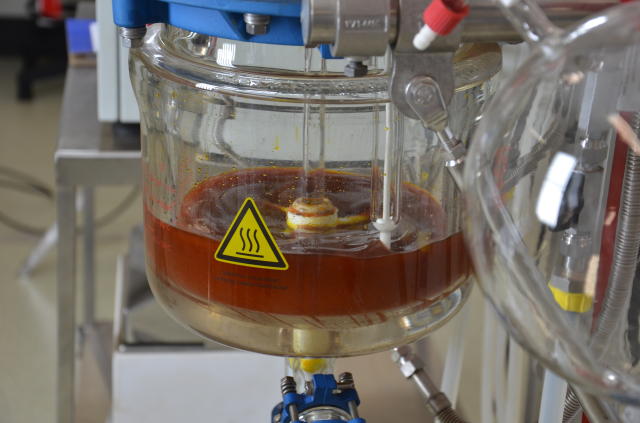
    Embrapa's Integra-C initiative channels the corporation's and partners' efforts on the dynamics of carbon and greenhouse gases (GHG) and their relationship with agri-food and forestry systems in light of climate change.

    Through the Paris agreement, 195 countries¹ made commitments to reduce carbon emissions² by 2050. In this context, the development of a national strategy for GHG emission monitoring based on the definition of standardized parameters that are compatible with IPCC methods and specific to local climate conditions will represent a strategic milestone for Brazil.


    ¹https://unfccc.int/ndc-synthesis-report-2023

    ²https://unfccc.int/NDCREG

This strategy relies on robust planning for data acquisition and integration and for the development of scientific knowledge to provide Brazil with suitable recognition for efforts toward sustainability and quality in domestic agricultural production.

All of that effort aims to foster international understanding of the peculiarities of tropical production systems, soil characteristics and our natural environments. It is an agenda with international repercussions and interest, which can be strategic for other tropical countries.

For the success of the initiative, there is a plan with structuring actions in 07 axes, with solutions for different production systems:

  • Development of a virtual dashbord (database, functionalities and metrics) on carbon balance in agricultural systems
  • Survey and enhancement of research infrastructure for the development of protocols and representations of the carbon balance in the main domestic agricultural systems
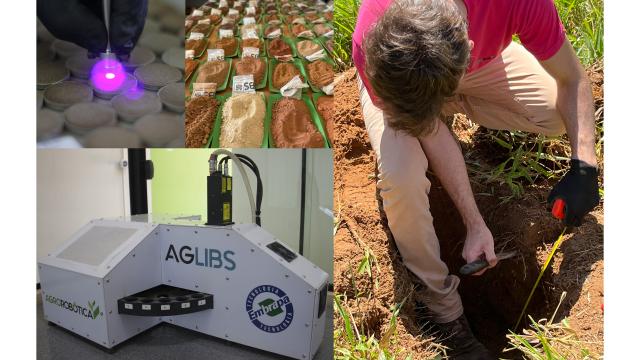
  • Survey and enhancement of infrastructure to improve alternative techniques for field data collection
  • Survey and enhancement of infrastructure for carbon balance metrics and models that are adapted to Brazilian conditions
  • Survey and enhancement of infrastructure for risk monitoring, adaptation and sustainability of local production systems
  • Development of infrastructure monitoring and maintenance plan in the medium and long term
  • Establishment of cooperation and technology transfer networks

Some activities have already started, such as mapping across Embrapa's research network to obtain information on infrastructure, data, experiments, and monitoring areas.


Web Content Display

  • Benefits

    It is a major challenge for scientists, as it entails integrating data and information, and developing metrics and protocols on carbon balance that are adapted to Brazilian agricultural systems through a corporate management platform, which will allow for:


    • Expanding the competitiveness of the agricultural sector on the international stage
    • Promoting risk analysis and management in agriculture
    • Performing the national inventory of greenhouse gas emissions and removals
    • Developing metrics to quantify emissions and removals and national indicators
    • Contributing to the achievement of targets stipulated in the Paris Agreement
Check how the platform works

News

Check the technologies

Product

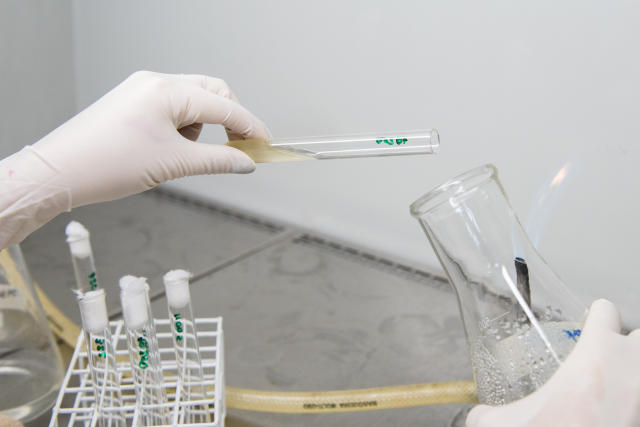
Resultado de mais de 19 anos de pesquisas, esta tecnologia foi gerada a partir de duas cepas de bactérias: Bacillus subtilis (CNPMS B2084) e Bacillus ...

Product

É uma inovação para digitalização dos solos, baseada no equipamento AGLIBS, que utiliza a inteligência artificial e aprendizagem de máquina para o mon...

Methodology

A RenovaCalc é uma ferramenta adotada pela Agência Nacional do Petróleo (ANP), que calcula a intensidade de carbono para os biocombustíveis que fazem ...

Download related publications

Publication
Diretrizes Técnicas para Certificação Soja Baixo Carbono – Primeira Aproximação.

O Programa Soja Baixo Carbono (PSBC) é uma iniciativa que objetiva agregar valor à soja produzida em sistemas que contribuam para reduzir as emissões...
Publication
Estoque de carbono e viabilidade econômica de erva-mate sombreada e sob pleno sol: estudo de caso em Cruz Machado e Bituruna, PR.

A erva-mate é uma das espécies florestais mais plantadas no Sul do Brasil, gerando renda para pequenos e médios produtores familiares, bem como para a...

Publication
iLPF na recuperação de pastagens.

O Estado de Mato Grosso possui cerca de 29 milhões de cabeças de gado e 26 milhões de hectares de pastagens e tem alta representatividade na pecuária...

Publication
Produção da lavoura em sistemas de ILPF.

A estratégia ILPF, na prática, contempla quatro modalidades de sistemas integrados de produção, as quais podem ser facilmente identi'cadas e, cada uma...